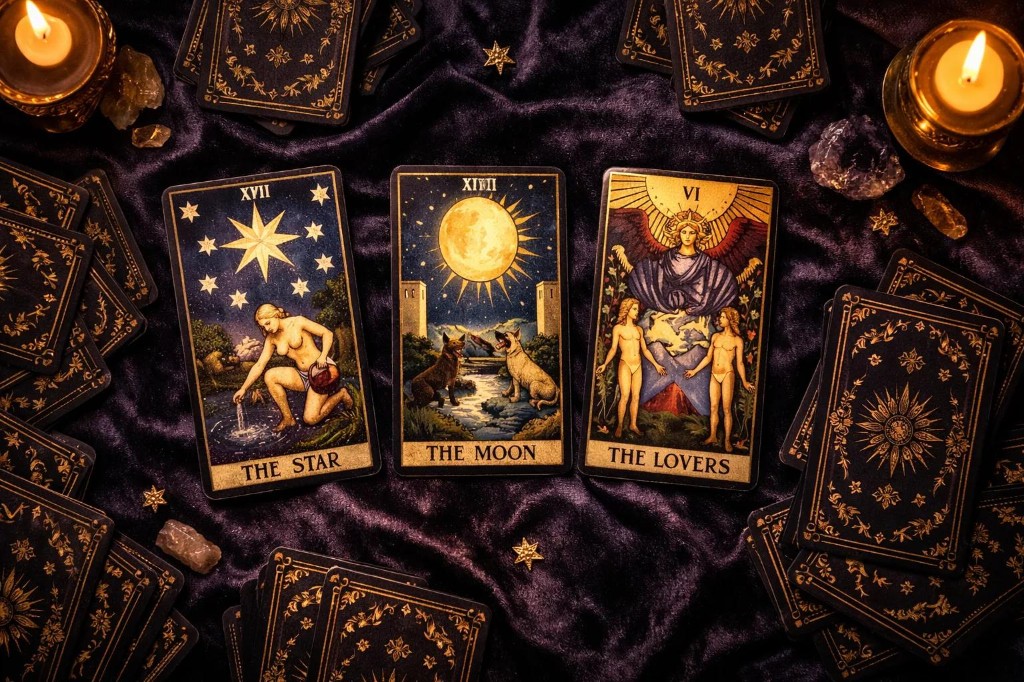
What is tarot reading?
Tarot is a deck of images that speak in symbols—78 cards, each pointing to a familiar life theme: choices, relationships, turning points, pressure, and growth. A draw does not lock in a fixed fate; it helps you see what you are feeling and asking more clearly.
On OmenDay you draw from the full deck free: One Card, Past·Present·Future, Love, Career, Yes/No lean, and Celtic Cross. Major Arcana mark turning points; Minor Arcana carry day-to-day weather across Cups, Wands, Swords, and Pentacles. Each card page lists upright, reversed, love, career, money, and spiritual notes.
How tarot cards work
You name a question, shuffle (or let the app shuffle), and place cards into positions that already have jobs—past, challenge, next step. Meaning comes from the card’s archetype plus its seat in the spread. That is why the same card can feel different in Love versus Career.
Tarot reading methods
Pick the method that matches the size of your question. Smaller spreads stay sharp; larger spreads need a clearer prompt so the story does not blur.
One Card Reading
Best for a single focus: mood check, “what to remember today,” or one decision filter. Write one sentence before you draw so the card has a job.
Past · Present · Future / Three Card
Past influence, present focus, near future. Use it when you want movement without a ten-position map.
Love Tarot Reading
Relational honesty—how you show up, what is unspoken, and where care needs a boundary. Do not use it to spy without consent.
Career Tarot Reading
Role energy, where effort pays, obstacle, support, and the next career move—kept practical and non-fatalistic.
Yes or No Tarot
One-card lean. Upright often reads as clearer go-energy; reversed as pause or reframe. Treat it as weather, not a courtroom verdict.
Celtic Cross
A fuller map of situation, challenge, foundation, recent past, possible outcome tone, and surrounding influences.
Tarot learning
Major Arcana vs Minor Arcana
Majors (22) name chapter-level themes. Minors (56) describe how that weather shows up in feeling, thought, action, and material life.
Upright vs reversed tarot cards
Reversed is not automatically “bad.” It often marks blocked expression, inner work, or delayed timing of the upright theme.
How to ask tarot questions
Prefer “How can I…?” and “What pattern am I feeding?” over medical, legal, or control-of-others verdicts.
How to interpret multiple cards
Read position first, then card, then links: repeating suits amplify; opposing elements ask for balance; later cards answer earlier ones.
78 tarot card meanings
Browse every card for upright, reversed, love, career, money, and spiritual notes. These pages are crawlable references—use them before or after a live draw.
Major Arcana
- The Fool
- The Magician
- The High Priestess
- The Empress
- The Emperor
- The Hierophant
- The Lovers
- The Chariot
- Strength
- The Hermit
- Wheel of Fortune
- Justice
- The Hanged Man
- Death
- Temperance
- The Devil
- The Tower
- The Star
- The Moon
- The Sun
- Judgement
- The World
Minor Arcana
- Ace of Wands
- Two of Wands
- Three of Wands
- Four of Wands
- Five of Wands
- Six of Wands
- Seven of Wands
- Eight of Wands
- Nine of Wands
- Ten of Wands
- Page of Wands
- Knight of Wands
- Queen of Wands
- King of Wands
- Ace of Cups
- Two of Cups
- Three of Cups
- Four of Cups
- Five of Cups
- Six of Cups
- Seven of Cups
- Eight of Cups
- Nine of Cups
- Ten of Cups
- Page of Cups
- Knight of Cups
- Queen of Cups
- King of Cups
- Ace of Swords
- Two of Swords
- Three of Swords
- Four of Swords
- Five of Swords
- Six of Swords
- Seven of Swords
- Eight of Swords
- Nine of Swords
- Ten of Swords
- Page of Swords
- Knight of Swords
- Queen of Swords
- King of Swords
- Ace of Pentacles
- Two of Pentacles
- Three of Pentacles
- Four of Pentacles
- Five of Pentacles
- Six of Pentacles
- Seven of Pentacles
- Eight of Pentacles
- Nine of Pentacles
- Ten of Pentacles
- Page of Pentacles
- Knight of Pentacles
- Queen of Pentacles
- King of Pentacles
How to ask a useful question
Strong prompts are specific and open. “What energy surrounds my job search this month?” works better than “Will I get the job?” After the draw, rewrite one line into an action you can finish today.
Upright and reversed
About one in four draws may reverse. Read the upright meaning first, then ask what feels stuck, private, or premature.
A simple tarot practice
Shuffle with your question in one sentence. Draw, read upright/reversed and domain notes, then journal three lines: what the cards name, what you already knew, and one deed for the next twenty-four hours.
Ethics
Do not use readings to stalk, guilt, or diagnose. Do not ask about medical outcomes or legal verdicts. If anxiety spikes, step away and talk to a trusted person. Pair situational questions with a Birth Chart or today’s Horoscope when you want longer context.